



As graduation approaches, many students say they feel prepared for tests and assignments but not for real-world responsibilities such as paying for a car, building credit, or managing their own expenses. As more students begin planning for life after high school, concerns about financial literacy, independence, and stress management are becoming increasingly common.
Junior Valeria Younes said that while she does well in school, she doesn’t feel ready for what comes next. “I know how to get good grades,” Younes said. “But I don’t know how to choose a car loan, build credit safely, or even set up a monthly budget.”
Other students shared similar concerns, saying they are unsure how to handle tasks like filing taxes, understanding credit cards, or managing bills after graduation.
Senior Renata Herrera said that even though she has taken a financial management class, she still doesn’t feel confident applying those skills independently. “I’ve learned some of this in class,” Herrera said. “But if I had to file taxes by myself right now or pick a credit card, I wouldn’t really know what I’m doing.”
This concern is reflected in national data. A 2025 Post-Graduation Readiness Report by the American Student Futures Institute found that 72% of graduates feel only somewhat prepared or not prepared at all for life after high school. The report also found that 59% of students do not feel ready to handle financial responsibilities such as credit, taxes, or insurance. About one in three also said they are unprepared for the stress that comes with adulthood.
Part of the issue, students say, is inconsistency in what is taught. While core classes like math, English, science, and social studies are required, courses focused on real-world skills such as personal finance are often optional.
“Some students learn this in certain classes, but not everyone takes them,” Herrera said. “It should be something everyone learns.”
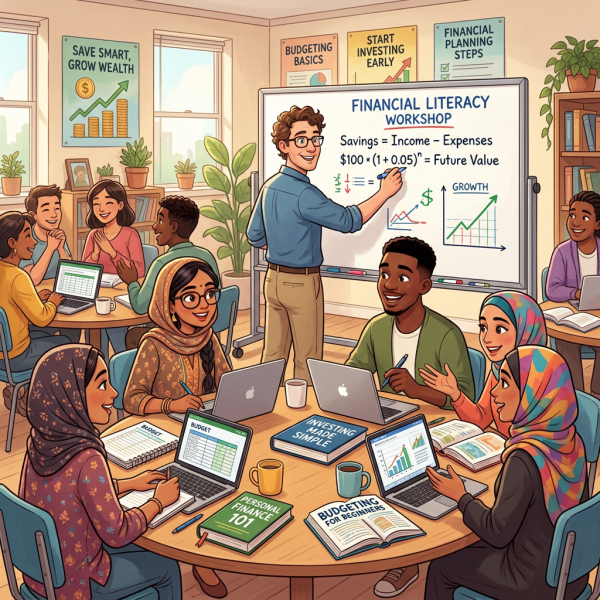
In response to these concerns, Florida lawmakers passed the Dorothy L. Hukill Financial Literacy Act in 2022, which will require students to complete a half-credit financial literacy course to graduate starting with the Class of 2027. The course covers topics such as budgeting, credit, and taxes. However, students and teachers say a single semester may not be enough to fully prepare students for real-life financial decisions.
At the national level, the College Board has introduced AP Business Principles/Personal Finance, a course designed to teach real-world financial skills. However, like many electives, it is not required and may not be available to all students. As a result, access to financial education still depends on the courses a student is able to take.
Business teacher Jason Dinter said students who take financial literacy courses often feel more prepared, but time limits affect how much they can learn. “There’s only so much you can cover in one semester,” Dinter said. “Students really need more time to practice these skills.”
Even as schools add more options, space in the curriculum remains limited. Teacher Sandra Dieguez said balancing required coursework with additional life skills classes can be difficult. “There’s only so much we can fit into the schedule,” Dieguez said. “But these are things students will need right away.”
For many students, that gap creates anxiety about the future.
“It’s overwhelming,” Younes said. “It feels like you’re expected to suddenly know how to manage money, pay bills, and handle stress without ever really practicing it before.”
As graduation approaches, students say the issue is no longer just passing classes but figuring out how to navigate adulthood with skills they feel they are still developing.